Cloud Gaming Mainstream Moment
Cloud Gaming's Mainstream Moment

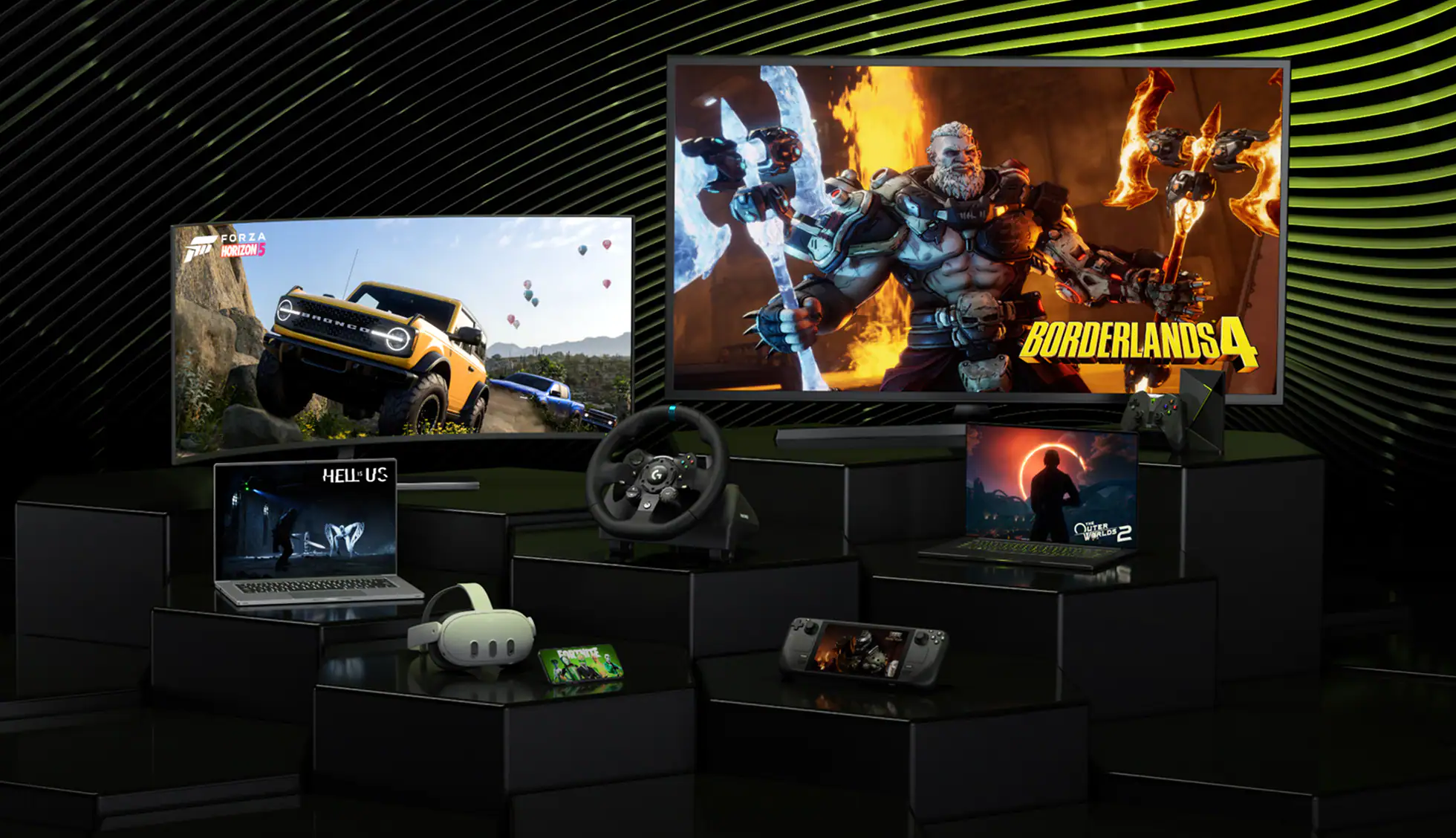
Cloud gaming has evolved from experimental convenience to mainstream distribution mechanism. According to industry research, approximately 60% of gamers have tried cloud gaming, with 80% reporting positive experiences—evidence that latency and quality constraints have narrowed significantly.

Cloud Gaming Mainstream Moment

Cloud Gaming's Mainstream Moment

The financial trajectory reinforces this shift. Global cloud gaming revenue is projected to grow from $1.4 billion in 2025 to $18.3 billion by 2030, with paying users expected to exceed 50 million. This growth isn’t driven by hardware sales or physical media; it’s powered by frictionless onboarding that lets players launch games instantly from ads, creator streams, or social media links.

For developers, this transforms acquisition economics. A player who sees a streamer playing an interesting game can click directly into that experience without downloads, installations, or payment friction. Conversion happens in seconds rather than days, dramatically improving marketing efficiency.

Platform strategies are evolving accordingly. Microsoft’s acquisition of Activision Blizzard expanded its cloud-first content footprint. Sony’s PlayStation Portal reflects a commitment to streaming-native devices. Valve’s renewed hardware exploration signals confidence in a hybrid-cloud future where local processing and cloud rendering coexist.

The console-centric competitive era is giving way to ecosystem-centric, device-agnostic competition. Players expect their games, saves, and social connections to follow them across phones, tablets, PCs, and TVs. Cloud gaming makes this seamless, reducing the importance of individual hardware purchases and increasing the value of platform subscriptions.

For emerging markets, cloud gaming offers access to premium experiences without premium hardware costs. A player with a mid-range smartphone and reliable internet can access the same titles as someone with a $2,000 gaming PC. This democratization expands addressable audiences while creating new challenges around latency infrastructure and data costs.

Despite progress, cloud gaming still represents a minority of total playtime. Hybrid usage patterns—streaming on mobile during commutes, playing locally on consoles at home—dominate current behavior. But as 5G networks mature and edge computing infrastructure expands, the line between local and cloud will continue blurring until it eventually disappears.
No Comments

Xbox Gaming Copilot: AI Assistance Without AI Slop

Xbox Gaming Copilot

As Microsoft pushes artificial intelligence deeper into the Xbox ecosystem, the company faces a skeptical gaming community wary of automation replacing human creativity. At GDC 2026, Xbox leadership outlined a deliberately conservative strategy: AI as assistive tool, not creative replacement.

Xbox Gaming Copilot: AI Assistance Without AI Slop

Xbox Gaming Copilot

New CEO Asha Sharma, who took the helm in February 2026, set the tone with a firm pledge to protect the platform from what she termed “soulless AI slop”. This creator-first philosophy echoes throughout Microsoft’s gaming AI initiatives, with general manager Haiyan Zhang emphasizing that “creative control should always stay with the game creators, the game development team”.

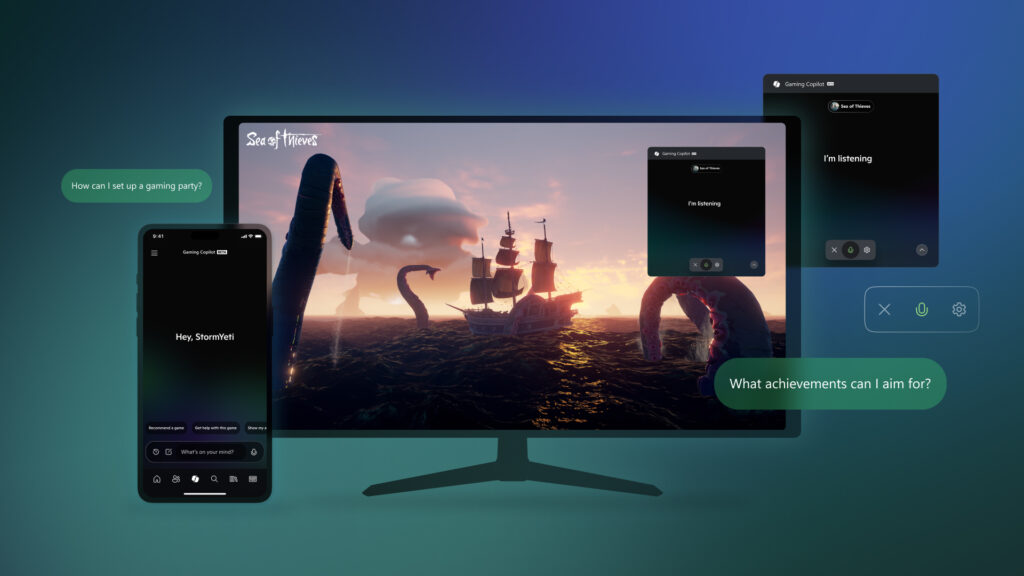
The centerpiece of this strategy is Xbox Gaming Copilot, an in-game assistant powered by large language models designed to help players bypass frustrating friction points. During GDC demonstrations, the AI offered voice instructions on tuning vehicles in Forza Horizon, beginner tips for Sea of Thieves, and quest guidance in Diablo IV. Early usage data reveals how players actually interact with the tool: 30% seek direct game assistance, 25% use it for game discovery and Game Pass navigation, and a surprising 19% simply chat with the AI for casual entertainment.

Auto Super Resolution (Auto SR) represents another assistive layer, working alongside technologies like DLSS to upscale frame rates on Windows devices, rolling out to ROG Ally handhelds in April 2026. An AI-powered highlight reel automatically captures monumental gameplay moments, recently launching for Xbox Insiders using Ally devices.

Perhaps the most thoughtful aspect of Microsoft’s approach involves content creator compensation. Gaming Copilot pulls walkthroughs and build guides from the internet—content that YouTubers and gaming websites rely on for revenue. Rather than quietly ingesting this work, Xbox is actively exploring licensing deals to financially compensate creators. Project manager Sonali Yadav stressed that “the role of AI is to amplify content creators, not replace them.”

The specifics of these licensing arrangements remain under wraps, but the messaging matters. At a time when tech giants are reshaping the internet economy, Microsoft is positioning Xbox as a responsible player that values human creativity. Even as next-generation Project Helix hardware includes dedicated NPUs to run these features, the company insists that AI serves players and creators—not the other way around.

No Comments

The AI Application Era: Gaming as AI’s Killer Use Case

The AI Application Era: Gaming as AI's Killer Use Case

At GDC 2026, a clear theme emerged: the global AI race has entered its “application phase,” and gaming has become the most important proving ground. With over 100 AI-related sessions—a 110% increase from 2025—the conference demonstrated that AI is no longer a distant vision but a technology being deeply integrated into every stage of game development.

The AI Application Era: Gaming as AI’s Killer Use Case

The AI Application Era: Gaming as AI's Killer Use Case

Chinese developers are leading this charge. Nine Chinese game companies presented 27 AI sessions, with Tencent alone accounting for 21 presentations—more than any other company worldwide. Their focus spans the entire development pipeline: from AI teammates that let solo players experience cooperative gameplay, to AI-generated Chinese martial arts animations integrated directly into action games, to AI-powered enhancements for mobile graphics and audio.

The significance of Tencent’s approach lies in its practicality. While many companies experiment with AI in research contexts, Tencent is deploying these technologies in commercially mature game products, creating a genuine feedback loop where players experience AI improvements in real-time. This accelerates both development and adoption, giving Chinese developers a unique advantage in defining how AI transforms gaming.

Tencent’s public technology lead, Chen Dong, spoke at the Luminaries Speaker Series—dubbed “Davos for gaming”—alongside executives from NVIDIA and Google, representing the only Chinese company invited to share the stage. His message: gaming’s inherent complexity makes it the ideal testbed for AI innovation. The same challenges that make game AI difficult—real-time requirements, player unpredictability, content generation at scale—also force the development of more robust, generalizable AI systems.

The data supports this view. By mid-2025, approximately 20% of new titles on Steam incorporated AI tools, with overall studio adoption exceeding 50%. Among AI-enabled projects, 88% used generative tools for art, animation, and world-building, enabling small teams to achieve production values previously accessible only to major studios.

But AI integration isn’t without risks. As development barriers fall, the influx of AI-generated content threatens to flood markets with low-quality “gameslop,” making discoverability a new competitive battleground. Platform algorithms, creator endorsements, and community ratings will increasingly determine which titles break through—not studio size or marketing budgets.

The GDC consensus was clear: AI has moved from theoretical possibility to practical necessity. The companies mastering AI integration today will define gaming’s next decade.

No Comments

Project Helix: Xbox’s Next-Gen Console Vision

Project Helix: Xbox's Next-Gen Console Vision

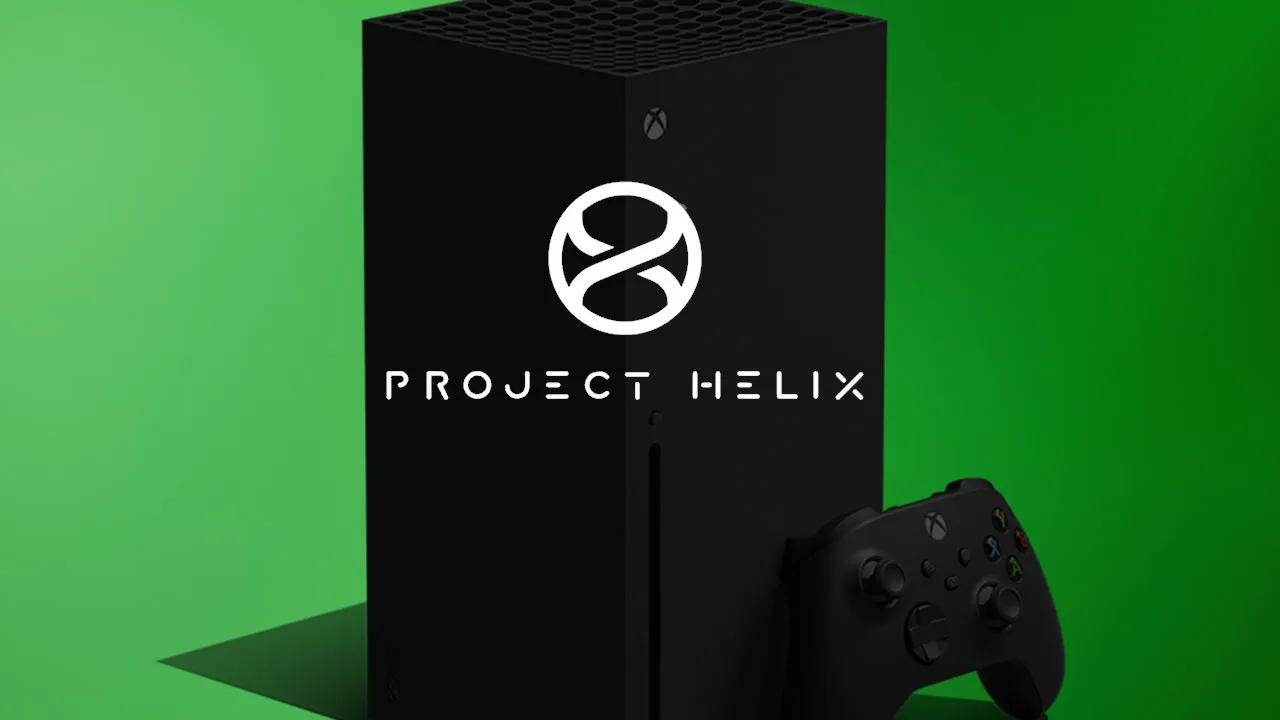
At the 2026 Game Developers Conference, Microsoft pulled back the curtain on Project Helix, the codename for its next-generation Xbox console. The reveal wasn’t about release dates or pricing—it was about philosophy. Xbox is designing a machine that doesn’t just play games but fundamentally reimagines the relationship between console and PC gaming.

Project Helix: Xbox’s Next-Gen Console Vision

Project Helix: Xbox's Next-Gen Console Vision

Project Helix is powered by a custom AMD system-on-chip, co-designed specifically for the next generation of DirectX and AMD’s FidelityFX Super Resolution technology. This partnership isn’t casual; it’s a deep architectural collaboration aimed at defining the future of rendering and simulation. Jason Ronald, Xbox’s vice president for next-generation hardware, promises “an order of magnitude leap in ray tracing performance and capability” that integrates intelligence directly into the graphics pipeline.

The implications are staggering. Games will feature more realistic lighting, dynamic worlds, and immersive environments that current hardware simply cannot sustain. But raw power isn’t the only goal. Microsoft is leaning heavily into neural rendering—using machine learning to generate materials, upscale images, and even create entire frames. This represents a fundamental shift from traditional rasterization toward AI-accelerated graphics.

Texture compression is getting a neural upgrade as well. With storage prices climbing and game install sizes ballooning, Project Helix will support deep texture compression and neural texture compression techniques that shrink file sizes without sacrificing visual fidelity. Combined with DirectStorage and Zstd compression, games will stream assets directly from SSDs, reducing RAM requirements and eliminating loading screens.

Perhaps most intriguing is Microsoft’s commitment to breaking down barriers between console and PC ecosystems. Project Helix is explicitly designed to play both console and PC games, and an upcoming Xbox mode for Windows 11 will let players switch seamlessly between work and play with a controller-optimized interface. The goal: give developers a simplified path to reach multiple platforms while reducing production costs.

Alpha versions of Project Helix hardware will ship to developers starting in 2027, suggesting a full reveal around 2028. That timeline feels distant, but given the Xbox Series X launched in 2020, the next generation is closer than it seems. Microsoft is positioning Project Helix not merely as a console upgrade but as a platform that unifies gaming across devices—an ambitious bet on an ecosystem-centric future.

No Comments